.png)
How Big Brands Win Christmas: 6 Christmas Marketing Campaigns Every Brand Can Learn From


Christmas is the noisiest marketing season of the year. Every brand runs offers, every feed looks festive, and every inbox screams SALE. Yet, only a few brands actually get remembered. The difference is simple: they don’t just sell during Christmas they connect.
At Brandfinity, we study festive campaigns not for aesthetics, but for strategy. Here’s a breakdown of how some of the world’s biggest brands consistently win Christmas, and what growing brands can learn from them.
1. Coca-Cola Owning the Emotion of Christmas marketing campaigns
What they did:
Coca-Cola has spent decades associating itself with Christmas. One of its most iconic examples is the Holidays Are Coming campaign, featuring the red Coca-Cola trucks, festive music, and visuals of communities coming together. The product is present, but never aggressively pushed.
In many campaigns, Coca-Cola doesn’t even talk about taste or price. Instead, it shows shared meals, family reunions, small acts of kindness, and joyful moments, all with a Coke naturally placed in the scene.

Why it worked: By repeating the same emotional cues year after year, Coca-Cola trained audiences to link the brand with Christmas itself emotionally. Today, seeing a red truck or hearing the jingle instantly triggers festive feelings.
Key lesson with example: If you sell a food, beverage, or lifestyle product, focus on where and when your product fits into real moments. For example, a D2C snack brand can show late-night family conversations instead of shouting about discounts.
2. Apple’s Storytelling Over Selling
What they did: Apple’s Christmas films, such as The Song and Share Your Gifts, tell emotional stories centered on family, creativity, and self-expression. The product is never the hero , the person is.
In one campaign, a young girl uses her Mac to remix her grandmother’s old song as a Christmas gift. The technology quietly enables the emotion without ever explaining features or specs.

Why it worked: Viewers don’t feel like they’re watching an ad. They feel like they’re watching a short film , which makes them watch till the end and share it organically.
Key lesson with example:Instead of listing features, show outcomes. For example, a fitness brand can show someone regaining confidence or consistency , not calories burned or reps counted.
3. Nike’s Purpose-Driven Festive Marketing

What they did:
Nike’s festive campaigns often focus on self-belief, resilience, and inclusivity. During Christmas, instead of shifting to traditional holiday tropes, Nike highlights athletes and everyday people pushing boundaries , even when it’s cold, dark, or difficult.
Some campaigns spotlight underrepresented athletes, reinforcing Nike’s message that sport is for everyone.
Why it worked: Nike didn’t chase Christmas aesthetics. It used Christmas as a backdrop while staying true to its core philosophy.
Key lesson with example: If your brand stands for something, amplify it during festivals. For example, a sustainable brand can focus on conscious gifting rather than flashy festive excess.
4. Amazon Convenience as the Hero
What they did:
Amazon’s Christmas campaigns often highlight last-minute gifting, forgotten presents, and delivery anxiety , all common festive stress points. Ads show how Amazon solves these problems through fast delivery and wide selection.
One common narrative: a customer realizes they forgot a gift, orders it online, and saves the day.

Why it worked: Amazon positioned itself as a stress-reliever during a stressful season.
Key lesson with example: If your brand simplifies life, show it clearly. For example, a logistics or SaaS brand can highlight how it reduces chaos during peak festive demand.
5. Cadbury‘s Culture-Led Festive Storytelling (India Focus)
What they did:
Cadbury’s festive campaigns in India focus heavily on generosity and togetherness. While Cadbury is closely associated with Diwali, their Christmas communication also highlights gifting, sharing, and family bonding.
Instead of positioning chocolate as a product, Cadbury positions it as a gesture, something you give to express care.
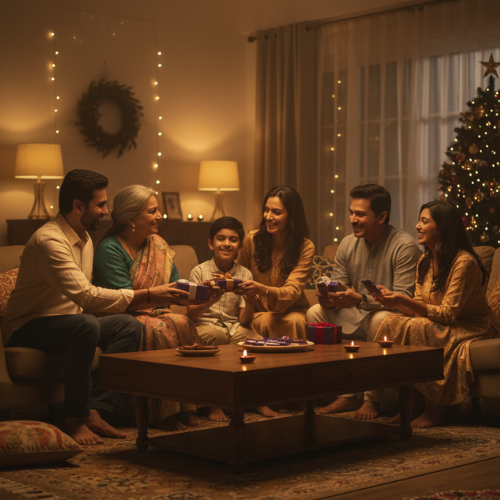
Why it worked: Cadbury adapted global branding to local emotions, making the brand feel culturally rooted rather than imported.
Key lesson with example: Understand local context. A regional brand can outperform global competitors by speaking the cultural language of its audience.
6. IKEA Celebrating Real, Imperfect Moments
What they did: IKEA’s Christmas campaigns often showcase small homes, messy dining tables, and imperfect family gatherings. The furniture isn’t showcased as luxury , it’s shown as part of everyday life.
The stories reflect real households rather than idealized setups
.

Why it worked: Audiences relate more to realism than perfection, especially during family-centric festivals.
Key lesson with example: Show real use cases. For example, a home brand can show compact homes and everyday struggles instead of unrealistic aspirational spaces.
What Growing Brands Should Learn from These Campaigns
Across all these case studies, one pattern stands out:
Emotion beats discounts
Story beats shouting
Consistency beats seasonal gimmicks
Brand values beat short-term sales tactics
Christmas marketing campaigns is not just a sales opportunity. It’s a branding moment.
Brandfinity’s Take
Big brands don’t win Christmas by being louder. They win by being clearer, more human, and more intentional.
Whether you’re a startup, a D2C brand, or a growing business, festive seasons like Christmas marketing campaigns are your chance to build long-term recall, not just short-term revenue.
Because the best Christmas campaigns don’t end in December. They stay in people’s minds all year long.


https://keonhacai5.net/ dạo này mình thấy nhiều người nhắc nên cũng bấm vào coi thử cho biết. Mình không đọc sâu đâu, chủ yếu lướt nhanh xem giao diện có dễ nhìn không. Cảm giác đầu tiên là trang làm khá gọn gàng, nhìn không bị rối dù kéo xuống một lúc. Mình thích kiểu họ chia nội dung thành từng khối rõ ràng, có mấy chỗ trình bày dạng bảng nên liếc qua là nắm ý chính luôn, khỏi phải tìm lung tung. Thanh menu cũng đặt khá dễ thấy, chuyển qua lại vài mục thấy mượt, không bị phải bấm đi bấm lại nhiều. Nói chung lướt chơi thôi mà thấy ổn vì bố cục chia khối và các…
sun win hôm bữa mình lướt thử vì thấy bạn bè nhắc hoài, kiểu vào xem giao diện ra sao thôi. Vừa mở lên là thấy tiêu đề “cổng game chính thức 2026” đặt khá rõ nên cũng yên tâm là không lạc trang. Trang này nhìn thiên về dạng các khối nội dung, kéo xuống cái là thấy từng phần tách bạch, đọc trên điện thoại ổn chứ không bị chữ dính vào nhau. Mình không có ngồi chọn game hay gì nhiều, chỉ bấm qua lại vài chỗ thì thấy menu để khá tiện tay, chuyển trang cũng mượt. Nói chung cảm giác họ làm UI hiện đại hơn mình tưởng, nhìn sạch sẽ và dễ tìm thứ…
hitclub6.it.com bữa lướt thấy ai đó nhắc nên mình bấm vào coi thử cho biết thôi. Mình không chơi gì nhiều, chủ yếu xem trang làm có dễ nhìn không. Cảm giác đầu tiên là giao diện khá “hiền”, chữ nghĩa rõ ràng, không bị nhồi nhét nên kéo xuống đọc cũng thoải mái. Mấy mục nội dung được chia thành từng khối nhìn gọn, kiểu lướt qua là nắm được họ đang nói về cái gì, không phải đoán. Mình cũng để ý bấm qua lại mấy trang con thấy tải nhanh, không bị đứng hay giật. Nói chung nhìn có vẻ họ chăm chút phần trình bày và sắp xếp thông tin, nhất là menu và các tiêu…
rophim mình thấy mấy đứa bạn share hoài nên tò mò vào xem thử cho biết. Mình không rành đánh giá phim hay dở đâu, chủ yếu coi trải nghiệm dùng có dễ chịu không thôi. Vừa mở lên là thấy nội dung nhảy ra khá nhanh, không bị mấy hiệu ứng rườm rà che hết màn hình nên cảm giác lướt nhẹ nhàng. Giao diện kiểu gọn gàng, nhìn phát hiểu luôn chỗ nào để tìm, chỗ nào để chọn phim, không bị chữ nghĩa dồn dập. Mình thử bằng điện thoại nữa thì kéo xuống vẫn mượt, chuyển qua lại mấy mục không bị khựng hay lag khó chịu. Nói chung nhìn vào là thấy họ chia các…
https://soicau247.com/ hôm nọ mình lướt thấy mọi người share nên bấm vào coi thử cho biết. Mình không kiểu ngồi “soi” kỹ hay chốt số gì đâu, chỉ xem trang họ trình bày ra sao thôi. Ấn tượng đầu là nội dung chia theo từng mảng khá dễ nhìn, kéo xuống là thấy phần kết quả với phần dự đoán tách bạch nên không bị lẫn. Mình cũng để ý họ có mấy bảng lô tô đầu/đuôi dạng cột, nhìn gọn và dễ dò hơn mấy trang hay nhồi chữ. Tiêu đề theo ngày hiện rõ, kiểu “Xổ số Miền Bắc ngày 03/06/2026” đặt ngay trên khu vực bảng đầu/đuôi lô tô nên nhìn phát biết mình đang ở mục…